


Quick Answer
Solitaire settings remain the most popular choice for engagement rings because they let a single diamond take center stage without competing for attention. The ten rings below span budget-friendly round and emerald cuts starting around $249 up to statement-sized princess and pear cuts near $1,129, all IGI certified with documented color and clarity grades. Whether you want a thin minimalist band, a bezel-set modern silhouette, or a classic prong solitaire, there's a design here at every price point.
Key Takeaways
- Every ring on this list is IGI certified, so the carat, color, and clarity grades are independently documented, not just seller claims.
- Solitaire settings range from classic four-prong to bezel, claw-prong, and split-shank styles, each changing how the stone catches light.
- Rose gold and yellow gold options sit alongside the more traditional white gold settings for buyers who want a warmer tone.
- Carat weights across this list range from 0.35tcw everyday pieces to 2CT+ statement rings, so budget and size don't have to be traded off against each other.
- Most designs are available with center stones ranging from E-F (colorless) to near-colorless, paired with VVS-VS clarity for an eye-clean look.
Why Solitaire Settings Remain a Top Choice
A solitaire setting holds a single diamond as the focal point of the ring, typically raised above the band by prongs or wrapped by a bezel. The style has stayed the most requested engagement ring format for one simple reason: it puts the diamond, not the setting, on display.
Because lab-grown diamonds are chemically and optically identical to mined diamonds, a solitaire setting shows off the same brilliance and fire regardless of the stone's origin, at a fraction of the price. That price difference is exactly why 2026 buyers are able to choose larger carat weights or higher clarity grades within budgets that would have bought a much smaller mined-diamond solitaire a few years ago.
How We Selected This List
Every ring below was pulled directly from Jewelcoves' solitaire rings collection, filtered for a spread of shapes, settings, and price points rather than repeating the same silhouette ten times. The selection criteria:
- IGI certification: Every ring on this list ships with independent grading documentation.
- Shape variety: Round, emerald, marquise, pear, oval, and princess cuts are all represented.
- Price spread: From everyday pieces under $300 to statement rings nearing $1,150.
- Setting variety: Prong, bezel, claw-prong, split-shank, and hidden halo styles, so the list isn't just ten versions of the same build.
Top 10 Solitaire Rings to Buy in 2026
Hidden Halo Emerald Solitaire Lab Grown Diamond Ring

- ShapeEmerald Cut
- SettingHidden Halo
- Color / ClarityE-F / VVS-VS
- CertificationIGI Certified
A hidden halo tucks a ring of smaller diamonds beneath the emerald center stone, adding sparkle from the side profile without changing the clean solitaire look from above. At its price point, it's one of the most detail-rich designs on this list.
0.35tcw Round Lab-Grown Solitaire Ring, Rose Gold
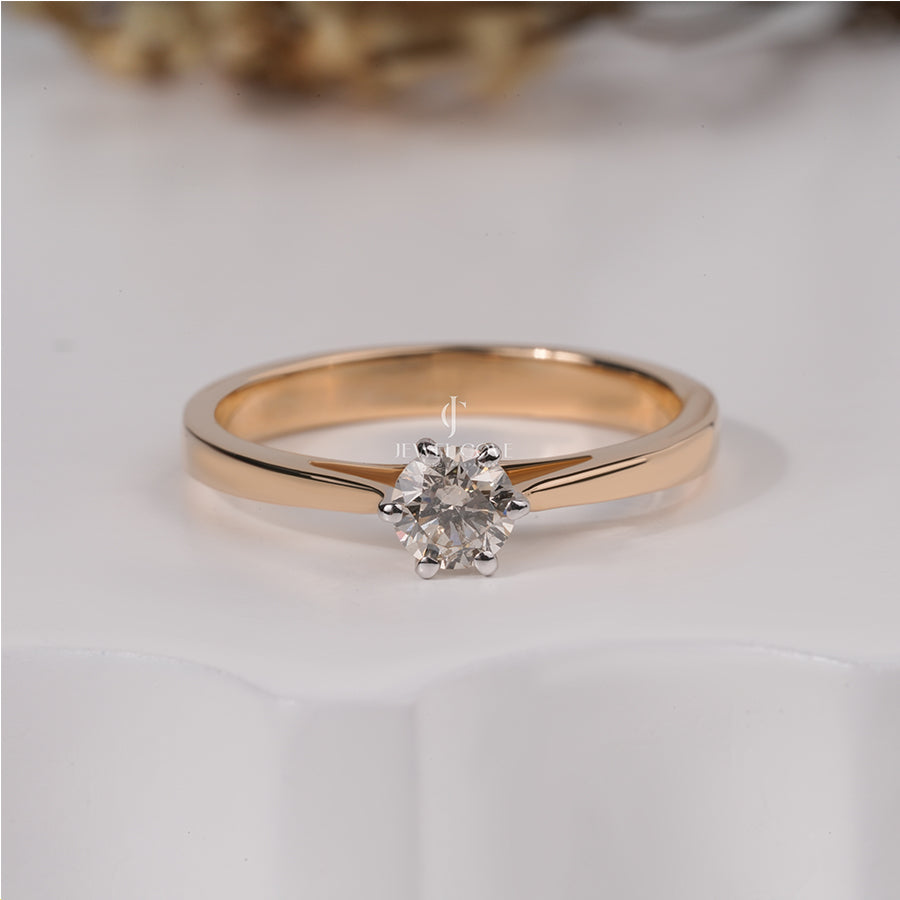
- ShapeRound Brilliant
- MetalRose Gold
- Color / ClarityE-F / VVS-VS
- CertificationIGI Certified
The round brilliant is still the shape with the most light-return per carat, and the rose gold setting gives it a warmer, more casual look than a typical white-gold round solitaire. A strong pick for a ring meant to be worn daily rather than saved for occasions.
1CT Emerald Solitaire Daily Wear Ring
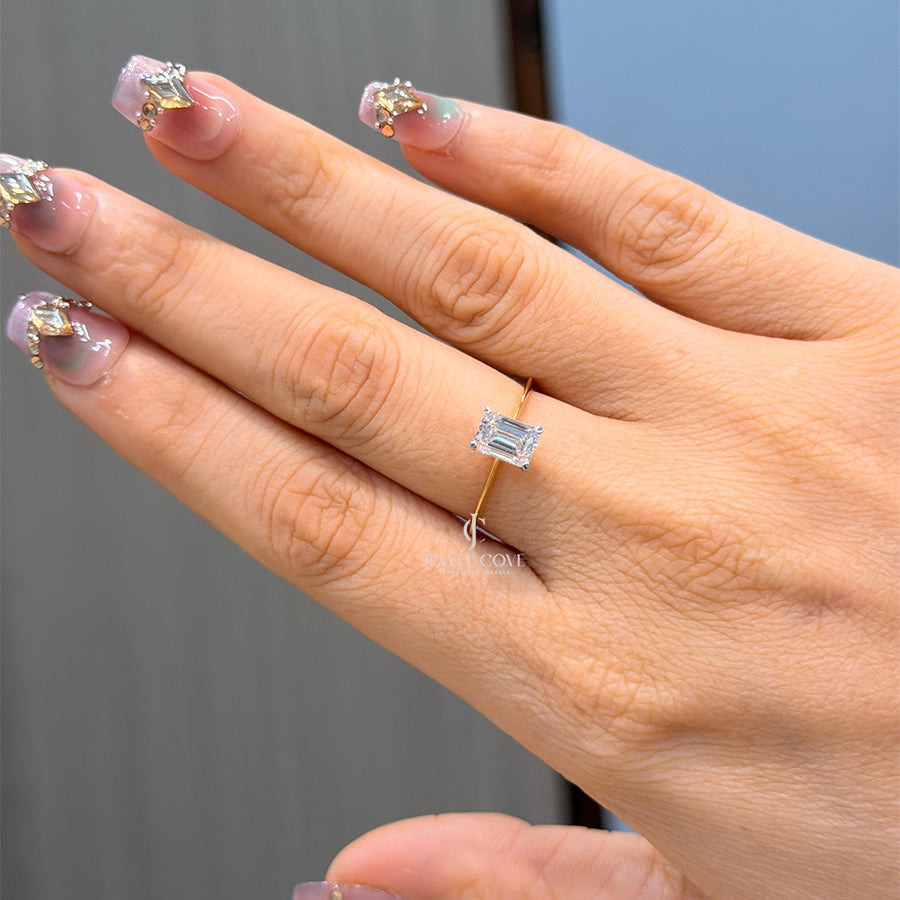
- ShapeEmerald Cut
- Carat1.00 CT
- StyleDaily Wear Solitaire
- CertificationIGI Certified
Built specifically as a daily-wear piece, this emerald-cut solitaire hits a full carat without the delicate detailing that needs extra care. The step-cut facets give a more understated, glassy sparkle compared to a round brilliant.
1CT Marquise Solitaire 6 Prong Setting Thin Band
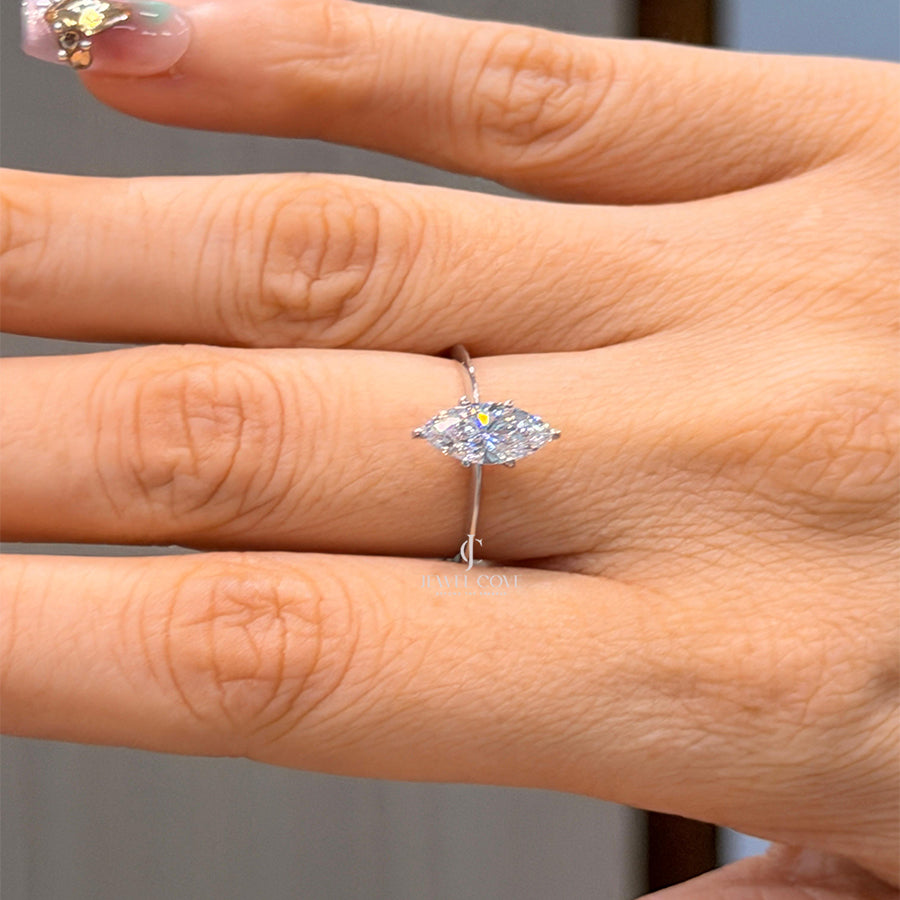
- ShapeMarquise Cut
- Carat1.00 CT
- Setting6-Prong, Thin Band
- CertificationIGI Certified
The marquise cut's elongated shape makes a 1-carat stone look noticeably larger across the finger than a round of the same weight. Six prongs secure the pointed tips, which are the most vulnerable part of this shape.
Pear Solitaire Lab Grown Diamonds Thin Band

- ShapePear Cut
- BandThin Band
- ColorE-F Color
- CertificationIGI Certified
The teardrop pear shape combines the brilliance of a round cut with a tapered point, and the thin band setting keeps the visual weight entirely on the stone rather than the metal around it.
2 CT Pear Lab-Grown Diamond Ring, Bezel Setting
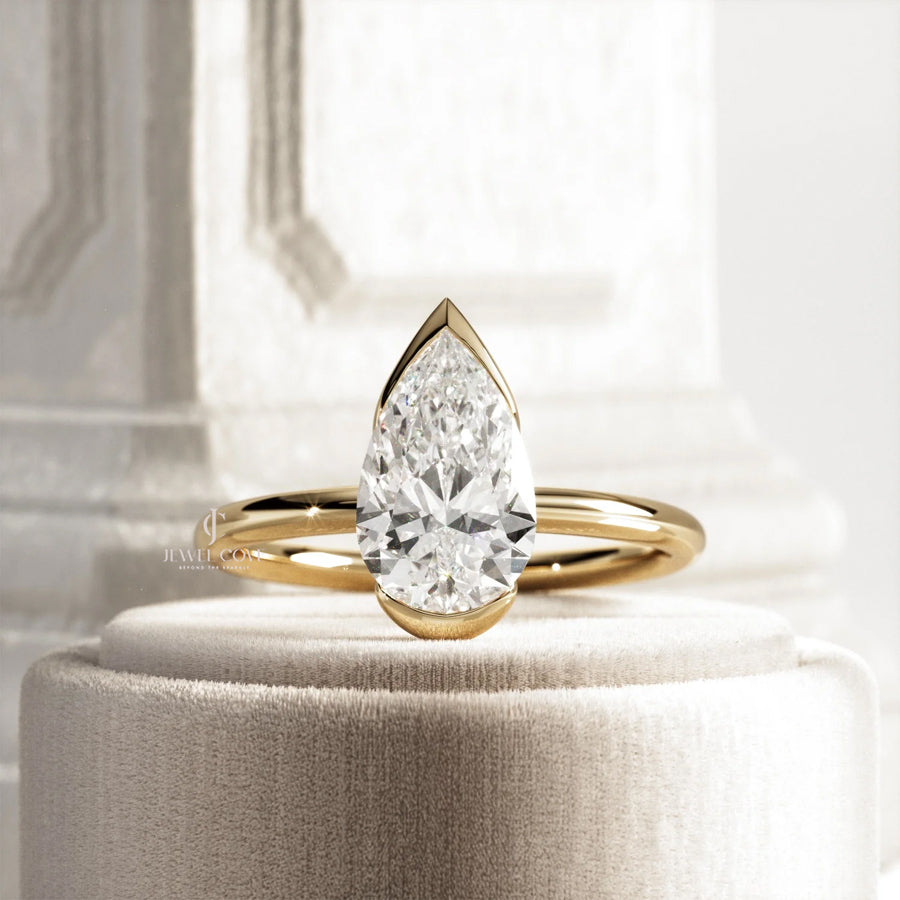
- ShapePear Cut
- Carat2.00 CT
- SettingBezel
- CertificationIGI Certified
A bezel setting wraps metal fully around the stone's edge, giving this 2-carat pear a lower profile and added protection for daily wear, which suits buyers who want size without the raised, catch-prone look of tall prongs.
2 CT Oval Lab-Grown Claw Prong Ring, Curved Setting
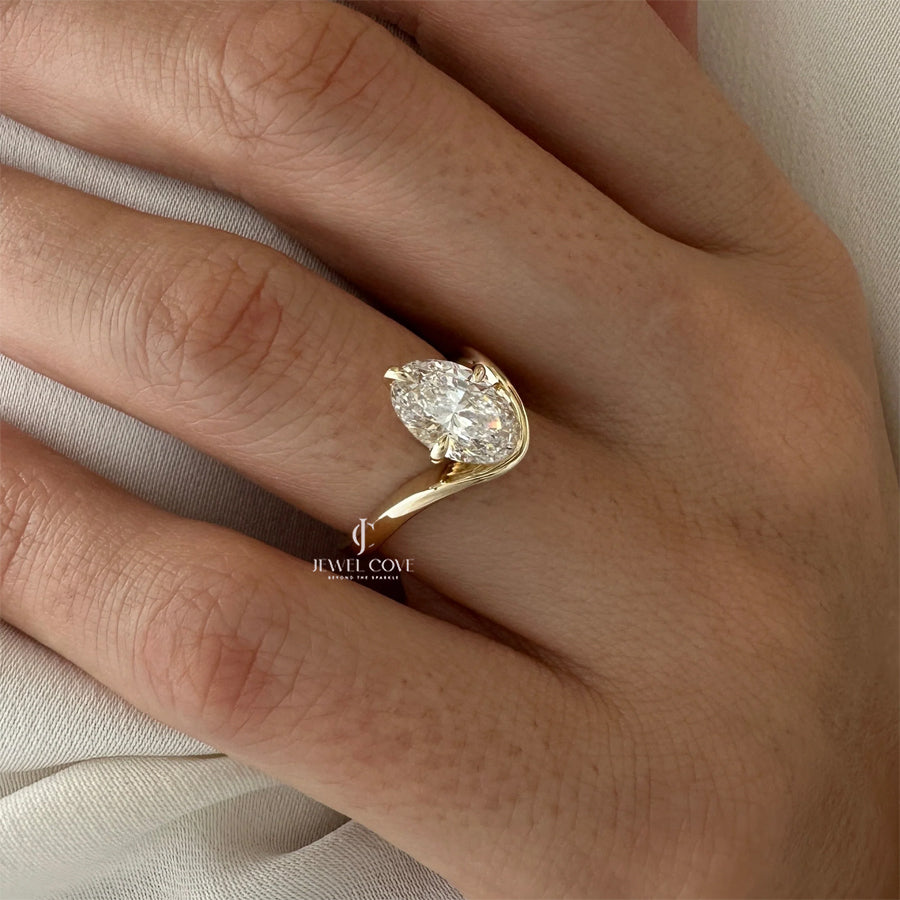
- ShapeOval Cut
- Carat2.00 CT
- SettingClaw Prong, Curved
- CertificationIGI Certified
Oval cuts have become one of the most requested shapes for exactly this reason: they read larger than their carat weight and elongate the finger. Claw prongs hold the stone with minimal metal coverage, keeping the focus on the diamond's face-up spread.
2CT Marquise Lab-Grown Diamond Ring, 6 Prong, Split Shank

- ShapeMarquise Cut
- Carat2.00 CT
- Setting6-Prong, Split Shank
- CertificationIGI Certified
The split shank divides the band into two thinner strands as it approaches the stone, creating negative space that makes a 2-carat marquise look even more prominent while keeping the overall design light on the hand.
Oval Solitaire Rose Gold Engagement Ring
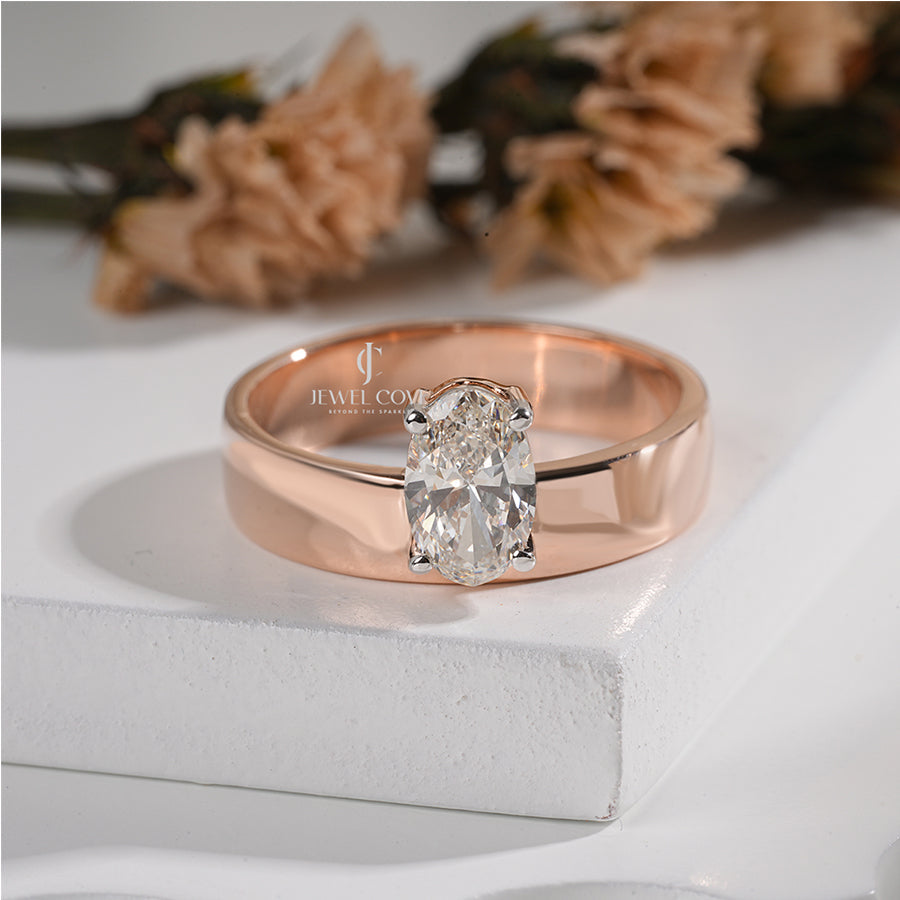
- ShapeOval Cut
- MetalRose Gold
- StyleClassic Solitaire
- CertificationIGI Certified
Rose gold has become one of the fastest-growing metal choices for engagement rings, and it pairs particularly well with an oval center stone, since the warm tone softens the stone's outline without competing with it.
Princess Lab Grown Lilac Dreams Solitaire Ring
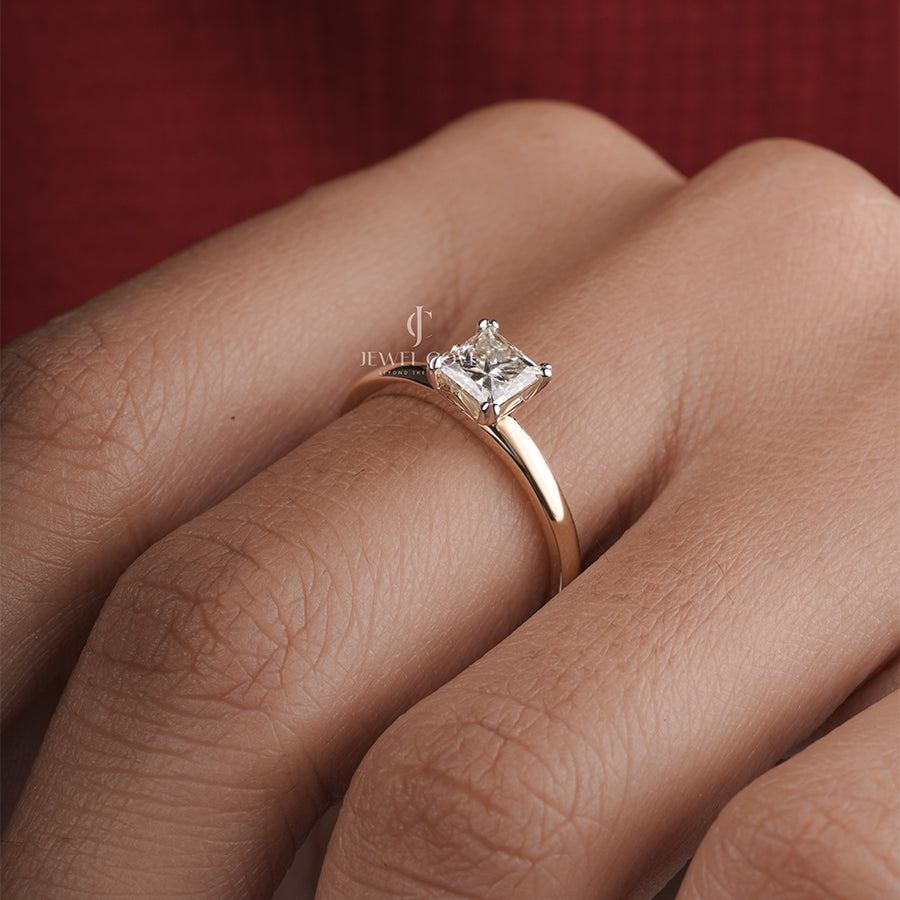
- ShapePrincess Cut
- Color / ClarityE-F / VVS-VS
- StyleStatement Solitaire
- CertificationIGI Certified
The princess cut's sharp, geometric lines give it a distinctly modern look compared to the softer curves of a round or oval. As the highest-value piece on this list, it's built for buyers who want maximum presence in a single, uncomplicated setting.
How to Choose the Right One for You
With ten strong options, narrowing down to one comes down to a few practical questions:
- How is it worn day to day? Bezel and low-prong settings, like the pear and hidden halo picks above, resist snagging better than tall claw prongs for active hands.
- What shape suits the hand? Elongated shapes like marquise, oval, and pear tend to lengthen the look of the finger, while round and princess read as more classic and symmetrical.
- What metal tone is preferred? Rose and yellow gold settings warm up the overall look, while white gold keeps focus purely on the diamond's brilliance.
- What's the target carat weight? Decide on a size range first, since that alone narrows this list from ten options to two or three within budget.
Frequently Asked Questions
Are lab-grown diamond solitaire rings a good long-term investment?
Lab-grown diamonds are best thought of as a way to get more carat weight and quality for the same budget, rather than as a resale investment. Like mined diamonds, they don't hold resale value the way precious metals do, but they offer significantly more stone for the price.
What's the difference between a bezel and a prong solitaire setting?
A prong setting uses metal claws to hold the stone, exposing more of the diamond to light from the sides. A bezel setting wraps a rim of metal fully around the stone's edge, offering more protection but slightly less light exposure at the girdle.
Which shape looks the largest for the same carat weight?
Elongated shapes like oval, pear, and marquise generally look larger across the finger than round or princess cuts of the same carat weight, since their surface area is spread over a longer outline rather than a compact circle.
Is IGI certification as reliable as GIA for lab-grown diamonds?
IGI is the most widely used certification lab specifically for lab-grown diamonds and applies the same 4Cs grading criteria used industry-wide. It's considered a reliable and verifiable standard, and report numbers can be checked directly on IGI's website.
Can these solitaire rings be resized after purchase?
Most solitaire settings, particularly prong and claw-prong styles, are among the easiest ring types to resize since there's clear space between the stone and the resizing point on the band. Bezel-set rings need a bit more care but can typically still be resized by an experienced jeweler.
Final Thoughts
The strongest solitaire on this list isn't necessarily the largest or the most expensive. It's the one that matches how the ring will actually be worn, whether that's a low-profile bezel for daily durability or a statement princess cut for maximum presence. Every option here is independently certified, so the grade on the paperwork matches what's on the finger.
Find Your Solitaire
Browse the Full Solitaire Rings Collection
See every shape, setting, and carat weight available, all IGI certified with documented color and clarity grades.
Shop Solitaire Rings
